
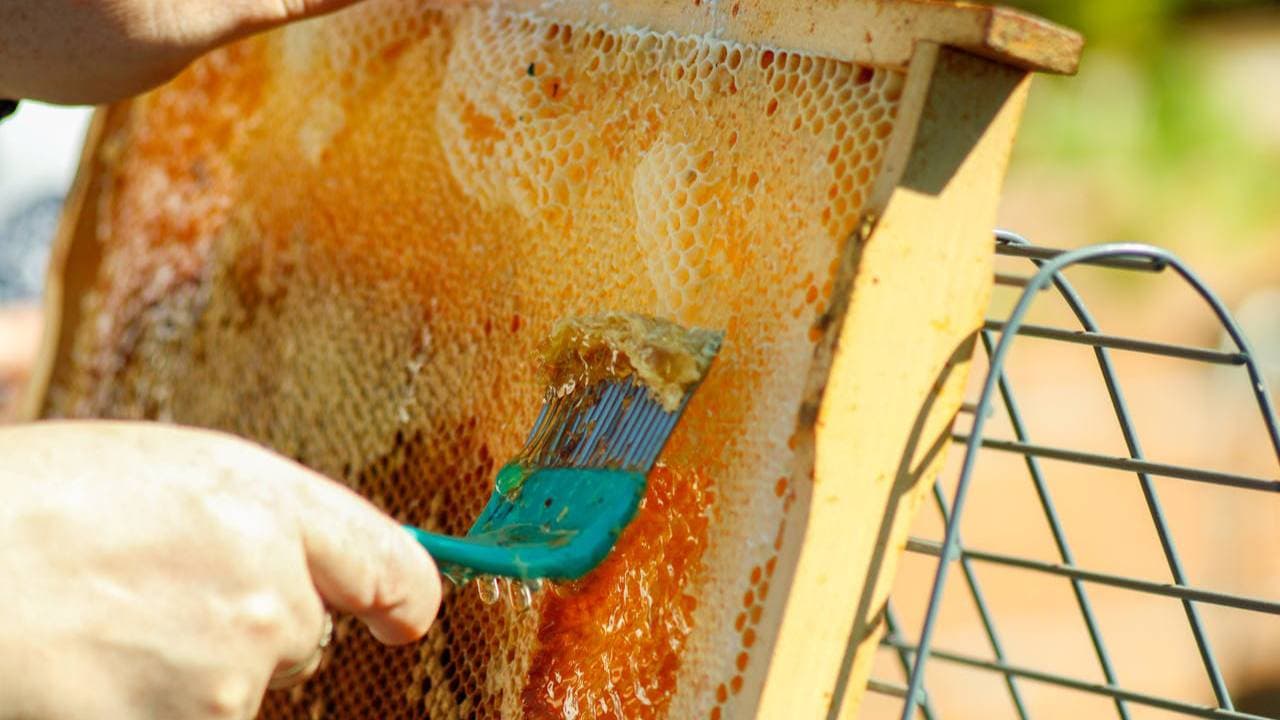
Curcumin from turmeric and the bioactive compounds in raw honey make one of the most evidence-backed natural combinations for inflammation and immunity.
The combination of turmeric and honey has deep roots in Ayurvedic medicine, where it appears in formulations for everything from respiratory infections to wound healing. In recent years, Western nutritional science has caught up — and confirmed that this pairing is more than just tradition.
Here's what the research says about why turmeric and honey work, how to use them, and what to look for in terms of product quality.
Why turmeric works (and why absorption is the challenge)
Turmeric's active compound is curcumin, a polyphenol with well-documented anti-inflammatory and antioxidant properties. The research base is substantial: over 12,000 peer-reviewed papers have examined curcumin's effects on inflammation, joint health, cognitive function, blood sugar regulation, and several disease pathways.
The most cited mechanism is curcumin's ability to inhibit nuclear factor-kappa B (NF-κB), a protein complex that regulates the expression of pro-inflammatory cytokines. In simplified terms: curcumin turns down the inflammation signalling in cells. This is why it's studied in the context of arthritis, inflammatory bowel disease, and metabolic syndrome.
But curcumin has a critical limitation: poor bioavailability. In its natural form, curcumin is poorly absorbed by the digestive tract, rapidly metabolized, and quickly eliminated. Studies estimate that less than 1% of ingested curcumin reaches the bloodstream in its active form.
This is where honey comes in.
How honey enhances turmeric absorption
Honey acts as what Ayurvedic texts call an "anupana" — a carrier that improves the bioavailability of therapeutic ingredients. For curcumin, this has two relevant mechanisms:
1. Fat solubility assistance Curcumin is fat-soluble. Raw honey contains trace lipids and wax compounds that create a slightly more favourable matrix for curcumin absorption in the gut. This effect is modest compared to combining curcumin with dietary fat (like black pepper extract or ghee), but it's not zero.
2. Enzymatic action The enzymes in raw honey — particularly glucose oxidase — appear to support the stability of curcumin during digestion. A 2019 study published in Food Chemistry found that honey-based curcumin preparations showed improved stability under simulated gastric conditions compared to curcumin alone.
3. Synergistic anti-inflammatory effect This is the most meaningful part. Raw honey contains its own set of anti-inflammatory compounds — including caffeic acid phenethyl ester (CAPE), chrysin, and various flavonoids. Combined with curcumin's NF-κB inhibition, the two create a broader anti-inflammatory effect than either alone.
A 2017 paper in the Journal of Nutritional Biochemistry documented that honey-curcumin combinations showed greater suppression of inflammatory markers in animal models than equivalent doses of either compound individually.
Practical benefits of the combination
Based on the available research, the turmeric-honey combination has genuine evidence behind the following applications:
Immunity support Both turmeric and honey have immunomodulatory properties — they can up-regulate or down-regulate immune responses depending on context. The combined antioxidant load helps neutralize free radicals that contribute to inflammation and cellular damage. For seasonal immunity support (especially during the transition from monsoon to winter, when respiratory infections peak), this combination is rational and well-supported.
Throat and respiratory health Raw honey has well-documented efficacy for soothing throat irritation and suppressing cough. A Cochrane review found honey more effective than placebo (and equivalent to some antihistamines) for cough relief in children. Turmeric's antimicrobial properties complement this, particularly against common upper respiratory pathogens.
A traditional Ayurvedic preparation for sore throat — a paste of raw honey and turmeric powder, consumed slowly — is one of the most time-tested applications of this combination.
Joint inflammation Curcumin's evidence in osteoarthritis is among the strongest in the nutraceutical literature. A meta-analysis published in the Journal of Medicinal Food (2016) reviewed 8 randomized controlled trials and found curcumin supplementation significantly reduced pain scores and improved function in osteoarthritis patients compared to placebo.
Honey's anti-inflammatory polyphenols add to this effect. For people managing chronic joint inflammation, a daily turmeric-honey preparation is a reasonable, low-risk complement to conventional treatment (not a replacement).
Blood sugar regulation Both honey (at low GI) and curcumin (via improved insulin sensitivity) may support more stable blood glucose. This is worth mentioning with the caveat that both still contribute calories and sugars, and people managing diabetes should monitor their response carefully.
How to make and use turmeric honey
The basic recipe: - 3 tablespoons raw wildflower honey - 1 teaspoon turmeric powder (or fresh grated turmeric) - A pinch of black pepper (piperine in black pepper increases curcumin absorption by up to 2,000%, which matters if you're consuming it therapeutically) - Optional: a few drops of cold-pressed coconut oil (adds fat for better fat-soluble curcumin absorption)
Mix into a paste. Store in a small glass jar at room temperature for up to a week.
How to use it: - One teaspoon in warm water (not boiling) as a morning drink - Stirred into warm milk for the traditional "golden milk" (haldi doodh) - Applied topically to minor cuts or acne as an antimicrobial paste - Mixed with a small amount of black tea for a warming, anti-inflammatory tea
A few practical notes: - Don't use boiling water — heat damages honey's enzymes and reduces the potency of curcumin - The paste will stain clothing and countertops yellow. Handle accordingly. - Start with less turmeric (¼ tsp) if the taste is too strong — you can increase gradually
Quality matters for both ingredients
The therapeutic properties of this combination depend entirely on the quality of your inputs.
For honey: processed, pasteurized honey has reduced enzyme activity and fewer antioxidants. For the anti-inflammatory and antimicrobial benefits, you need raw honey — cold-filled, not pasteurized. Organic Yellow's raw Himalayan honey sticks are cold-filled and NABL-certified. Each 8g stick is a convenient single serving — perfect for mixing a fresh portion of turmeric paste without opening a jar.
For turmeric: choose organic where possible, and prefer fresh or minimally processed. Turmeric powder loses potency over time as curcumin oxidizes. Buy in small quantities and store away from light and heat.
Who benefits most
The turmeric-honey combination is particularly well-suited to: - People with chronic joint pain or inflammatory conditions - Anyone managing seasonal respiratory issues - Those who want a natural, food-based approach to immunity support - People in the 40+ age group managing early metabolic changes (blood sugar, inflammation)
It's low-risk for most adults at the doses described. People on blood thinners (curcumin has mild anticoagulant properties) or with active gallbladder disease should consult a doctor before using turmeric therapeutically.
The bottom line
Turmeric and honey is one of the best-evidenced natural food combinations for inflammation and immunity. The combination works synergistically — honey improves curcumin stability and adds its own anti-inflammatory compounds, while turmeric amplifies the overall anti-inflammatory effect.
The keys: use raw honey (enzyme activity intact), add black pepper (piperine for bioavailability), avoid boiling water (preserves both), and use it consistently. This is a daily habit, not a one-time cure.