Jamun has been used in Ayurvedic medicine for blood sugar management for thousands of years. Jamun honey carries some of those same bioactive compounds — here's what the research actually shows.
Jamun — the Indian blackberry (Syzygium cumini) — has been used in Ayurvedic medicine for over 2,000 years. Its bark, seeds, leaves, and fruit are documented in classical texts for blood sugar management, digestive support, and anti-inflammatory effects. Modern pharmacology has spent decades investigating these claims. Much of it holds up.
Jamun honey combines the bioactive compounds present in jamun nectar with the inherent properties of raw wildflower honey. Here's what that actually means — with particular focus on blood sugar.
What makes Jamun medically interesting?
Syzygium cumini is a large tropical tree native to the Indian subcontinent. The deep purple-black fruit is tart and slightly astringent, with a seed that contains the highest concentration of bioactive compounds.
The most studied compound is jamboline — a glycoside found primarily in the seeds. Jamboline has demonstrated activity as an alpha-glucosidase inhibitor: it slows the enzyme responsible for breaking complex carbohydrates into glucose in the intestine. The result is a lower, more gradual post-meal blood glucose spike. This mechanism is similar to the pharmaceutical drug acarbose, but gentler in effect and profile.
Other key compounds include:
Anthocyanins — the dark purple pigments (delphinidin, cyanidin, petunidin) responsible for Jamun's distinctive colour. Anthocyanins have documented antioxidant activity and have been studied for improving insulin sensitivity in peripheral tissues.
Ellagic acid — a polyphenol in the seeds and bark with antioxidant and anti-inflammatory properties. Research suggests ellagic acid may protect pancreatic beta cells from oxidative stress damage — a significant finding since beta cell deterioration is central to the progression of Type 2 diabetes.
Gallic acid — a phenolic compound with anti-hyperglycaemic properties. A study published in the Journal of Ethnopharmacology found that gallic acid reduced blood glucose in diabetic animal models by improving glucose uptake in peripheral tissues.
Flavonoids — quercetin, myricetin, and kaempferol derivatives present in the fruit and leaves, with additional anti-inflammatory and antioxidant activity.
Jamun and blood sugar: what the science shows
The evidence for Jamun's anti-hyperglycaemic properties is substantial. It's included in the Ayurvedic Pharmacopoeia of India as a diabetes-supportive herb, and clinical research has followed the traditional use with increasing scientific validation.
A 2013 study in the Asian Pacific Journal of Tropical Biomedicine found that Jamun seed extract reduced fasting blood glucose by 26% in Type 2 diabetic patients over 12 weeks — a clinically significant reduction. Multiple in-vitro and in-vivo studies have confirmed the alpha-glucosidase inhibitory activity of Jamun compounds.
The studied mechanisms include:
Alpha-glucosidase inhibition — slowing carbohydrate breakdown in the intestine, reducing the rate of glucose absorption into the bloodstream. This produces a lower, more gradual post-meal glucose curve.
Improved insulin secretion — some Jamun compounds appear to stimulate pancreatic beta cells to produce more insulin in response to glucose, addressing one of the core dysfunctions in Type 2 diabetes.
Reduced hepatic glucose output — the liver produces glucose between meals (gluconeogenesis). Jamun compounds may reduce this output, contributing to lower fasting glucose levels.
Antioxidant protection — diabetes involves significant oxidative stress that progressively damages insulin-producing cells. Jamun's high total antioxidant capacity may slow this damage over time.
An important caveat: most of this research uses concentrated seed or bark extracts at doses higher than what's present in honey from jamun-foraging bees. Jamun honey is not a diabetes treatment. But it carries real bioactive compounds from the jamun plant — making it a genuinely better sweetener choice for blood sugar-conscious individuals than plain honey or, especially, refined sugar.
Jamun honey vs plain honey for blood sugar
All raw wildflower honey has a lower glycaemic index than refined sugar (approximately 45–58 vs. 65). Jamun honey adds a second layer: the anthocyanins, ellagic acid, gallic acid, and other bioactive compounds absorbed from jamun nectar during foraging.
The comparison matters practically. If you're choosing between plain wildflower honey and Jamun honey, both give you the baseline GI advantage over sugar. Jamun honey adds the specific anti-hyperglycaemic phytocompounds that make Syzygium cumini clinically studied in diabetes management.
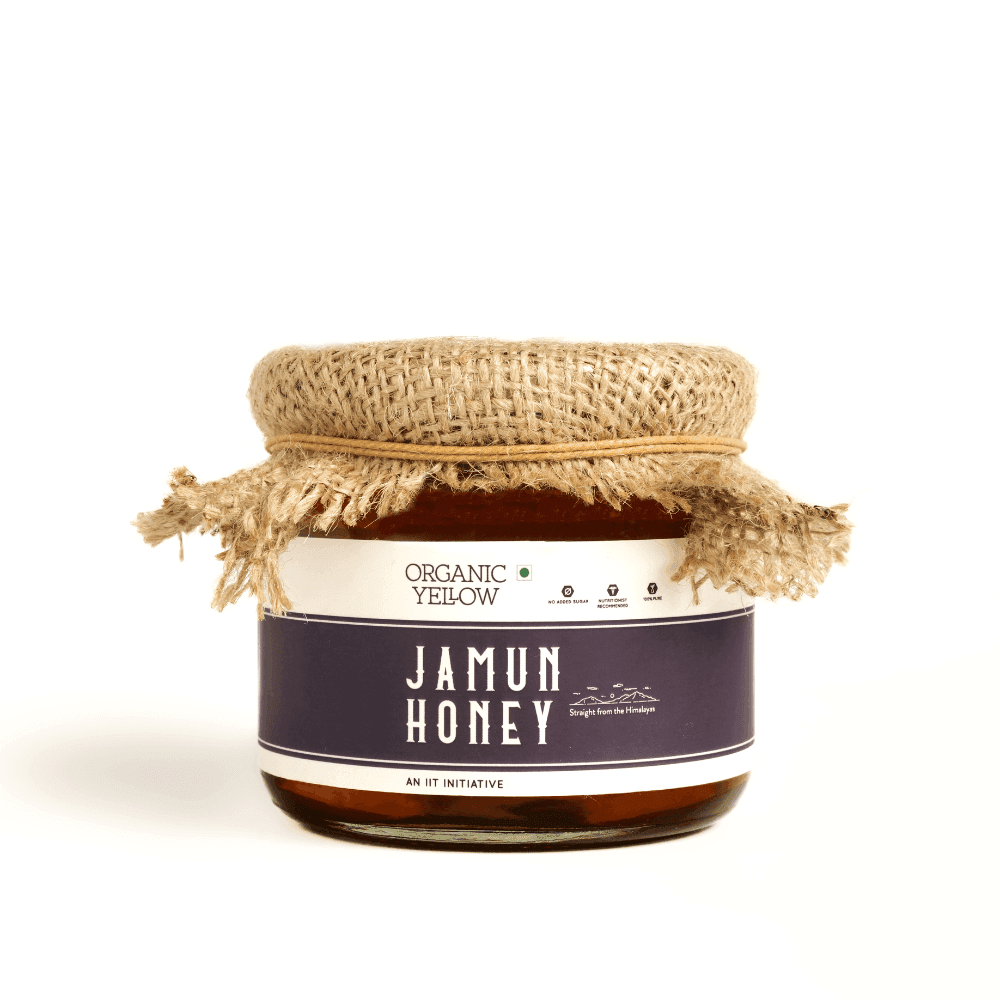
Colour is a reliable quality indicator. Genuine Jamun honey is noticeably darker than standard wildflower honey — ranging from deep amber to near-black in high-jamun-content batches. This dark colour reflects the anthocyanin content absorbed from jamun nectar. Light-coloured honey labelled as "jamun honey" is typically mislabelled or heavily blended with neutral honeys.
Our Jamun Honey Sticks are sourced from bees foraging specifically on Jamun trees during the flowering season (April–June in Uttarakhand). Each batch is NABL-certified for purity and composition. The characteristic dark amber colour and slightly tart, fruity taste profile are natural markers of authentic Jamun honey — not artificial colouring.
How to use Jamun honey for blood sugar support
Replace refined sugar completely. This is the highest-leverage change. Any refined sugar in your daily routine is the first target. Jamun honey as a direct replacement in tea, coffee, and warm water provides both the GI advantage and the Jamun-specific phytocompounds.
Morning on an empty stomach. One teaspoon of Jamun honey in warm water upon waking, before food. Empty-stomach absorption maximises contact between honey's bioactive compounds and the gut lining.
Keep quantities moderate. Even the best honey is predominantly fructose and glucose. Two to three teaspoons per day is a reasonable ceiling for people actively managing blood sugar. Above this, the carbohydrate load progressively outweighs the bioactive benefits.
Pair with low-GI foods. Jamun honey's blood sugar benefits are amplified as part of a generally low-GI diet — whole grains, legumes, vegetables, adequate protein. It functions as a supportive element within a sound dietary framework, not as a compensation mechanism for a high-sugar diet.
Consult your doctor if on diabetes medication. Jamun compounds have genuine blood glucose-lowering activity. If you're on metformin, sulphonylureas, or insulin, combining with Jamun honey could produce additive glucose lowering. Discuss this with your physician, particularly if you monitor your HbA1c.
What Jamun honey is not
Jamun honey is not a cure for diabetes, not a substitute for prescribed medication, and not a replacement for dietary management. The evidence is supportive — real and meaningful — but not at the level of clinical treatment.
What it is: the best available sweetener choice for blood sugar-conscious individuals, combining raw honey's baseline glycaemic advantages with specific bioactive compounds from one of Ayurveda's most studied anti-hyperglycaemic plants. As a daily choice — the sweetener in your morning tea, your warm water ritual, your occasional drizzle — Jamun honey is a consistently better option than refined sugar and a step beyond plain wildflower honey for anyone focused on blood glucose management.
Small consistent improvements, made daily, compound into meaningful health outcomes over months and years. That's the honest case for Jamun honey.