
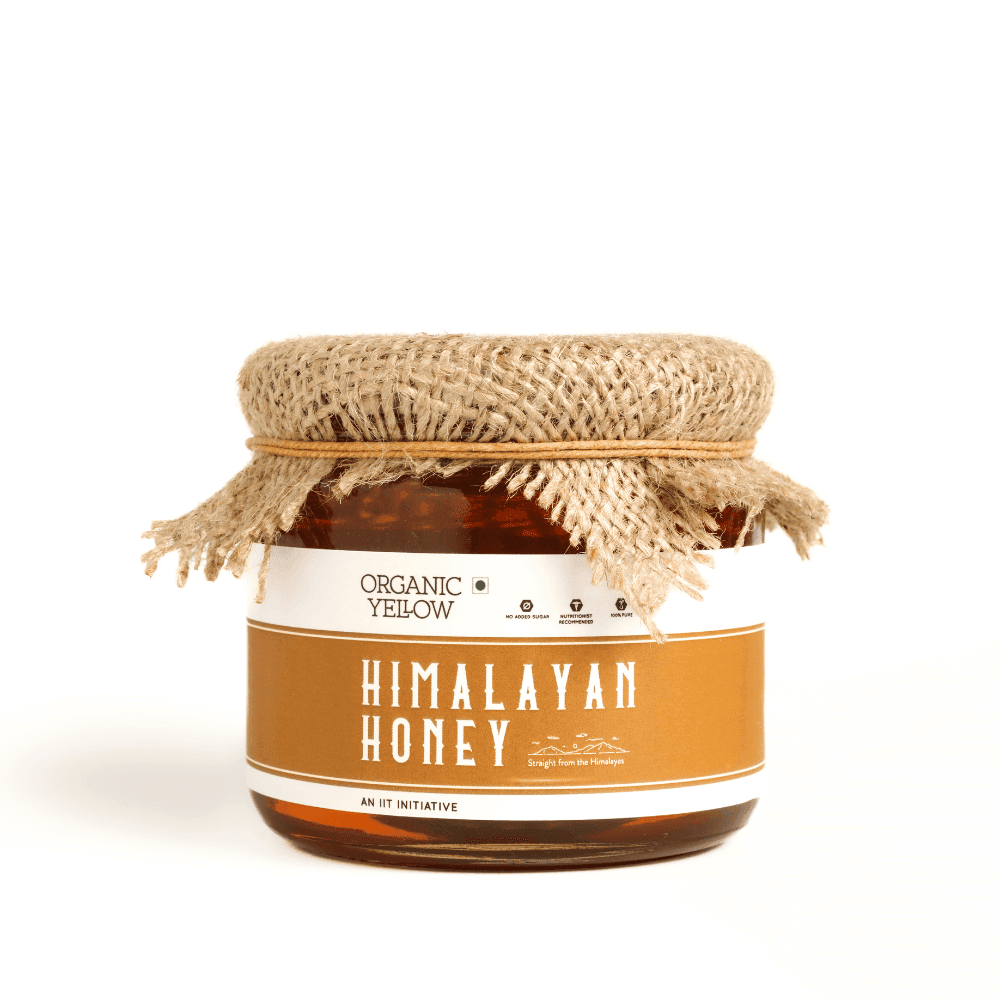
Published by Organic Yellow · Updated
A practical guide to honey test reports: match the sample, check the methods and understand what a laboratory result can and cannot prove.
You cannot confirm that honey is free from added syrup by looking at a spoonful. A useful buying decision starts with the ingredient label and evidence that matches the actual product. A test report is more informative than an unexplained purity score, but it still needs careful reading.
What does adulteration mean?
For a product sold as honey, adding undeclared sugar syrup is different from honestly labelling a blend with other ingredients. A lemon-and-honey blend should be compared using its ingredient list; the presence of declared lemon extract is not, by itself, evidence of secret syrup addition.
The Codex Standard for Honey says honey sold as such should not have added food ingredients. This is a standard for the food, not proof that any particular seller meets it.
Read these parts of a honey lab report
- Sample identity: look for the product name, batch or lot number, sampling date and report number. A generic description such as Honey is harder to connect to the jar in your hand.
- Method and result: ask which added sugars or quality measures the test addresses. Different methods answer different questions.
- Limits: read units, reference limits, detection limits and comments. A result should not be turned into a wider claim than the laboratory makes.
- Laboratory scope: check that accreditation covers the relevant test and date, rather than relying on a logo.
NABL's explanation of accreditation concerns a laboratory's competence for its accredited scope. It does not make a honey brand NABL-certified. FSSAI's testing-methods directory lists honey methods, including isotope-related measurements. NMR, or nuclear magnetic resonance, and isotope-ratio analysis are different techniques; neither name should be used as shorthand for all possible checks.
What do Organic Yellow's documents show?
The published lab documents and their limitations describe a sample labelled Honey and isotope, C4-sugar and fructose/glucose-related results. They do not establish a universal 98/100 rating or testing of every pack and batch. The page identifiers also require clarification before treating the pages as a fully matched record.
Ask for a report connected to the batch you plan to buy. If the answer does not resolve the sample identity or the scope of a claim, leave that claim unverified.
Can a home test settle it?
Do not treat thickness, crystals, a water test or a flame video as a complete authenticity certificate. They do not provide the sample-specific measurements above. For a shorter shopping checklist, see checking honey labels in India.
Correction
The earlier article presented a selected investigation as a claim about most honey in India, confused testing methods, and claimed every-batch testing and a verified mountain supply chain. Those unsupported statements have been removed.