
Timing changes how well your body uses honey's bioactive compounds. Ayurvedic tradition and modern nutrition science agree on most of it — here's the breakdown.
Honey has been consumed intentionally for thousands of years. Ayurvedic texts from 3,000 years ago were already specific about when to take it — and with what. Modern nutritional science has since added its own layer of understanding. The two largely agree.
Here's what the evidence says about when honey works best — and when it doesn't serve you as well.
Morning: the strongest window
The strongest case for a specific honey-consumption timing is morning, on an empty stomach. This is where most traditional protocols originate and where the most physiological support exists.
Why an empty stomach matters: Without food already present in the stomach, honey's bioactive compounds — enzymes, phenolic acids, flavonoids, antimicrobial factors — make direct contact with the gut lining and absorb more efficiently. The glucose oxidase enzyme, which produces hydrogen peroxide in honey, has maximum antimicrobial effect when honey is not diluted by competing digestive processes.
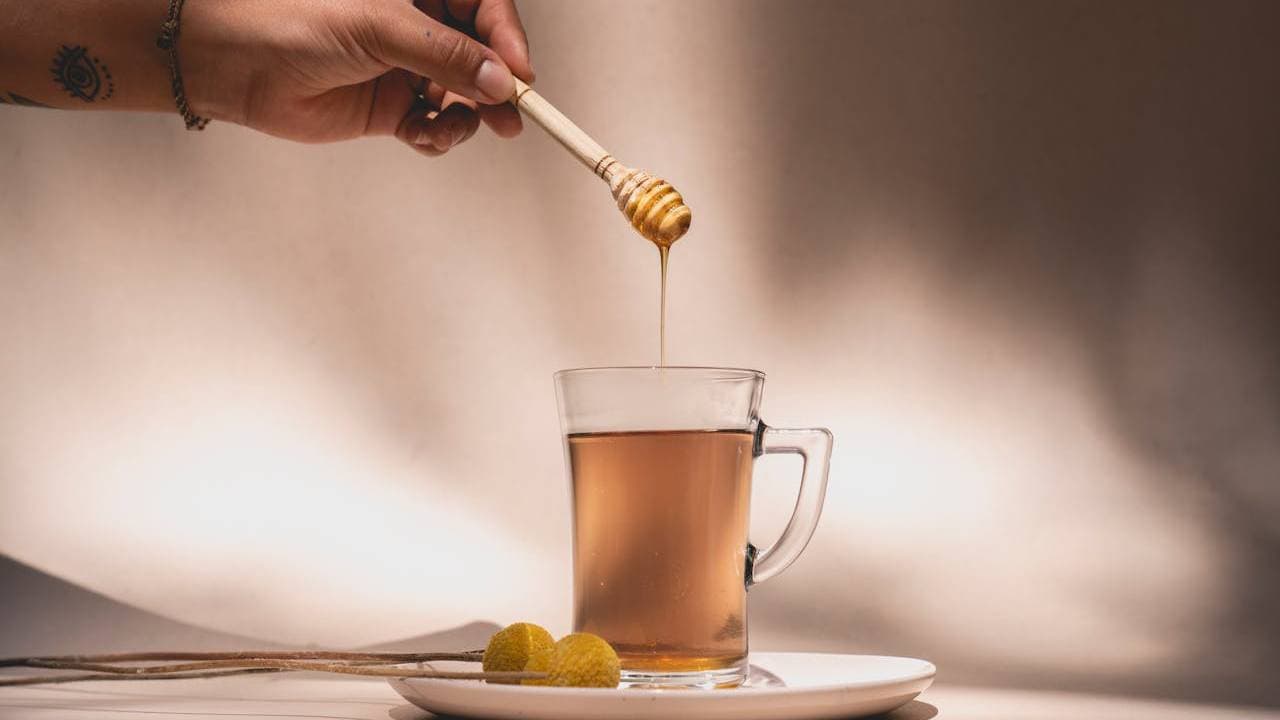
The warm water protocol: The classic morning ritual is one to two teaspoons of honey dissolved in 300–400ml of warm water. Adding lemon juice adds meaningful value: lemon's acidity slows gastric emptying and moderates blood glucose response from breakfast; vitamin C enhances iron absorption from subsequent meals.
Temperature constraint: Use warm water, not boiling. Honey's enzymes begin denaturing above 40°C. Boiling water (100°C) destroys most of the enzyme activity that differentiates raw honey from sugar. The water should be warm to the touch — comfortable to drink immediately. This is why we specify cold-extraction and cold-filling in our production process: to preserve the enzyme activity right through to the moment you use the stick.
Our Lemon Honey Sticks are designed for this morning ritual — each 8g stick is the right amount for a glass of warm water, pre-portioned, with intact cold-extracted enzyme activity.
Before meals: a digestive primer
Taking a small amount of honey (one teaspoon, 5–7g) 15–20 minutes before a meal has a specific mechanism: honey's diastase (amylase) begins pre-digesting complex carbohydrates in the mouth and stomach before pancreatic enzymes arrive. This can reduce digestive burden and ease the bloating or discomfort that some people experience after carbohydrate-heavy meals.
Honey also contains prebiotic oligosaccharides that support beneficial gut bacteria. Research in the Journal of Medicinal Food found honey supplementation measurably increased Lactobacillus populations in participants over 8 weeks — and a healthier gut microbiome is consistently associated with better digestive comfort and more efficient nutrient absorption.
Pre-meal honey is most relevant for people with slower digestion, irritable bowel tendencies, or significant post-meal discomfort.
Pre-workout: a natural energy source
Honey is physiologically well-suited to pre-workout use. Its carbohydrate composition — 38% fructose plus 31% glucose — provides dual-fuel metabolism: glucose enters the bloodstream quickly for immediate energy, while fructose metabolises more slowly for sustained output.
This dual mechanism outperforms pure glucose as an athletic fuel. A review in the Journal of Strength and Conditioning Research found honey maintained blood glucose more effectively than glucose alone during prolonged exercise, producing a more stable energy curve without the midpoint crash associated with simple sugar intake.
Consume honey 20–30 minutes before training. One to two teaspoons is appropriate for most sessions under 60 minutes. For longer sessions, you can repeat the dose at the 45-minute mark.
Shilajit Honey Sticks are popular for pre-workout use — the combination of honey's carbohydrates with shilajit's fulvic acid, which supports mitochondrial function, creates an effective natural energy stack without synthetic stimulants.
After meals: the weakest window
Post-meal honey is the least well-supported timing for most of honey's specific benefits. When consumed after a full meal, honey must compete with existing digestive processes. The enzymes have reduced contact with the gut lining. Absorption of bioactive compounds is slower. And blood glucose is already elevated from the meal itself — adding honey's carbohydrates stacks onto an already rising glucose curve.
For dessert sweetening or satisfying a sweet craving after eating, small amounts are perfectly fine. But if you're taking honey for its bioactive properties — enzymes, prebiotics, anti-inflammatory compounds — post-meal is not the optimal window.
One exception: Honey in herbal tea after a meal can be worthwhile through the tea's properties. If chamomile, tulsi, or ginger tea supports your digestion after meals, adding a small amount of honey for palatability is entirely reasonable. The tea's mechanisms work independently of the timing constraints on honey itself.
Before sleep: an interesting but limited case
Some wellness traditions recommend a teaspoon of honey before bed. The proposed mechanism: honey's fructose replenishes liver glycogen overnight, providing fuel for the liver's metabolic activity during sleep (which includes growth hormone secretion and tissue repair). Low liver glycogen has been associated with poorer sleep quality in some research.
The theory is plausible. Whether the practical effect from one teaspoon of honey is large enough to matter is less clear — the evidence is mostly theoretical and small-scale at this stage.
Low risk, worth trying if you sleep poorly or wake frequently. Keep it to one teaspoon, no other food alongside it, and use raw honey so the fructose content is intact.
What to avoid at any time
Boiling water. As noted above, temperatures above 40°C begin deactivating honey's enzymes. Above 60°C, most biological activity is lost. Never dissolve honey in boiling water.
Large quantities in one sitting. More than 2–3 teaspoons per serving produces minimal additional benefit and adds significant sugar load. The advantages of honey over sugar compound over consistent daily use in sensible quantities — not from large single doses.
Adding honey to already-sweet meals. The glycaemic index advantage is most useful when honey is the primary carbohydrate source, not layered on top of pasta, rice, or bread. Time your honey for standalone moments — morning water, pre-workout, herbal tea — rather than as an addition to carbohydrate-heavy plates.
The consistent thread across all timing windows: raw, cold-extracted honey performs better than pasteurised honey because the enzyme activity and phenolic compounds that make timing matter are intact. Honey that has been heated has already lost much of what makes these protocols work.